Monday, August 10, 2009

Lessons from Netflix Culture: The 9 Behaviors & Skills


While some folks were making a big deal about the fact that Netflix doesn't have a formal vacation/time off program (and I've actually worked at a place like that before) what caught me eye from the presentation was the 9 behaviors and skills.

Notice they don't use the term "values," probably because values seem to imply things that you just have (or are) vs. things you can learn or be taught.

The 9 values they define are judgment, communication, impact, curiosity, innovation, courage, passion, honesty, and selflessness.

I really encourage you to drill down and look at the bullet points. I'm sure you'll find some you do well at and others where you need some work. I know I did.

I picked 9 of the ones I found the most interesting and important. And folks that have worked with me before know that some of these I'm pretty good at, while others continue to be a work in progress:

  • You exhibit bias-to-action, and avoid analysis paralysis.
  • You listen well, instead of reacting fast, so you can better understand.
  • You make tough decisions without excessive agonizing.
  • You say what you think even if it is controversial.
  • You contribute effectively outside your specialty.
  • You smartly separate what must be done well now, and what can be improved later.
  • You make time to help colleagues.
  • You think strategically, and can articulate, what you are, and are not, trying to do
  • You treat people with respect independently of their status or disagreement with you.


  • Yep, there are some tough ones in there and there is a lot more gold these 128 slides that reinforced by my experience in small and large companies alike.

    (NOTE: If you register for a slideshare account you can download a .pptx version and print them out for you cube/office wall like I did.)

    Wednesday, August 05, 2009

    CyberSpies: They are back (and we have the logs to show it!)

    From Cyber attacks at U.S. energy companies.

    From the Loglogic Department of Statistics


    “Ever since cyberspies hacked the U.S. electrical grid earlier this year, businesses have become increasingly aware that a security breach at an energy company that results in a major blackout has the potential to wreak havoc,” said Pat Sueltz, CEO at LogLogic. “We talked to leading information security professionals in the energy sector to find out how they determine the level of risk they carry and architect their security infrastructures to fortify against both internal and external attacks.”

    The study surveyed information security professionals from a broad spectrum of energy corporations and government organizations ranging from less than $99 million to more than $1 billion in annual revenue. Of the respondents, two-thirds field more than 75 serious security vulnerabilities each week, with half resolving more than 150 attacks per week.


    How can someone use the phrase, "Ever since cyberspies hacked the U.S. electrical grid earlier" without cracking up?

    Who doesn't have 75 severe vulnerabilities a week? 75 seems a bit low, actually?

    What does "resolving 150 attacks a week" even mean?

    Loglogic gets the award for this one.

    (CAVEAT: Loglogic is sort of a competitor of my employer, but this has nothing to do with that)

    Choose Civility?


    Once in Austin we had a Great Horned Owl in the large Elm in our back yard. As I was watching it, my wife walked up behind me and scared me. We have a running joke about being scared of owls and birds of prey carrying off pets and small children. So last night during supper when I saw the flash of large wings through the side window and I rushed outside and brought our overweight Boston Terrier inside to spare her from this unknown bird of prey.

    On our front lawn all of us (including Sam, our 20 mo old) watched as a large vulture tore up an unidentified creature into pieces no larger than a small child's fist.

    It turned out to be a possum. I and the two oldest walked over to investigate, or as close as the flies would let us.

    Then we went to Rita's to wash the taste of buzzard out of our mouth.

    Choose Civility

    Tuesday, August 04, 2009

    Best firmware choice for WGR614L?


    So my WGR614L arrived yesterday and I have it running with the built-in firmware but I'd obviously let to get something new on on there that gives me a command line. I used OpenWRT a while back and definitely liked the ipkg's but am wondering what the best/most actively maintained Broadcom distro that runs well on the WGR614L these days?

    Thursday, July 30, 2009

    Squid v. DDoS

    This is hardly more than worth a tweet but longer than 140 chars but Squid Defense against DDoS caught my eye.

    I see two lessons here:

  • Using Open Source tools to respond to an incident is a crude but powerful technique that can get the job done. Try doing this with commercial products.
  • Environments that were properly engineered with caching and load balancing and could respond to DDoS wouldn't have to worry about the attacks in the first place.
  • Tuesday, July 14, 2009

    CyberSecurity isn't new and needs domain knowledge

    I agree with Joe 100% on this. So much so that if you replace "Smart Grid" with "Cyber Security" everything is also true.

    If all one had to draw from was the flood of conferences, webinars, and advertisements, it would appear that CyberSecurity is a very recent invention that will be achived en-masse in the near future. In reality, elements of CyberSecurity first appeared in the 1998-2000 time-frame. Additionally, decades old best practices will continue to be used in "CyberSecurity" for at least the next 5-10 years. Until about 6-8 months ago, domain knowledge was a given for those participating in the "CyberSecurity." Now, domain knowledge doesn’t seem to be a requirement.

    Saturday, July 11, 2009

    How Chinese CyberSpies Really Compromised the Grid


    Now that I've got your attention. Honestly, I have no idea, but it will be really amusing to see my google analytics stats on this one, I wonder how much malware gets spread through typos in the most popular web sites. Maybe everybody else allows their browser to get them to the right place, but not me. I end up at some weird sites, or at least sites that people in Frederick, Maryland would consider weird.

    BTW, the site above is from dgmail.com but it would be an interesting research project to analyze the content of fat-fingered sites. Sure, most are probably ads, but may be some goodies lurking in there.

    Monday, June 22, 2009

    First Impressions: HP Mini (Best Buy Style) vs. Lenovo S10

    So I picked up whatever the model of the HP Mini that they sell at Best Buy for $329 (the 10.1 model with a 16GB flash drive) for my mother with the goal of installing Ubuntu, since she the one family member that I've successfully converted from Windows.

    Keyboard - the larger keyboard of the HP Mini's are well known. You can definitely tell the difference with the larger keys in that it allows more natural touch typing but the feel is spongier. About what you'd expect from a consumer laptop. The arrow keys are smaller size that all the other keys which is very annoying. It is difficult to see the special keys since they are light grey. On my white Lenovo they are blue so it is much easier. Overall the action is much crisper on the Lnovo

    Ubuntu Netbook Remix 9.04 installation - Installation took slightly longer, I assume due to the flash drive, but the OS upgrade too so longer (scrollkeeper was pegged at 100%) I killed gdm and went into the console and did the apt upgrade's there which seemed to work better. Still really slow. Hangups at upgrade of synpatic and other packages. I assume this is all do to the flash drive. There is also a known bug in the sound support. No sound through the speakers. Haven't tried a headphone.

    Wireless - Even though both use the same Broadcom chipset I had more problem with the Mini. It connected to 1/3 of the networks I tried (a WPA2 for my Verizon Westell DSL modem) but not successfully with an HP 420 WPA access point or a Cisco 851W that was wide open. Perhaps I had L2 ACLs on the latter, not sure.

    Ethernet - the RJ-45 port is plugged by default. The Mini appears to use a Marvell driver (as opposed to the Reatek used most other Netbooks). I could not get a lease and was getting PHY errors.

    Touchpad - the buttons are on the side which are really annoying but I could probably get used to them. But the touchpad is definintely better than the Dell Mini 10. I prefer the buttons on the buttom that are much crsiper.

    Screen - the 576 vertical resolution is definitely a pain since 600 of most Netbooks is too small. The screen seems somewhat brighter than the Lenovo.

    Ports & Form Factor - these I knew about so wasn't suprised. No VGA. Ethernet is plugged. Two USBs (like the Lenovo). It is too narrow, IMHO. Sitting side by side the top of the screen is a full 3/4" shorter than the Ideapad. These sacrifices are needless in my opnion because it makes the form factor too small and thin.

    Upgradeability - RAM bay is easy on the back, takes up to 2GB but you have to remove the keyboard to upgrade the drive.

    Noise: It is definitely seems quieter that the Lenovo. Not sure whether it is the driver or the fan.

    Bottom line: I've very happy with my Lenovo even though it hurts my hands and the keyboard is small. Overall Linux runs much better. I don't see the need for a slow (if quiet) flash drive. The form factor of the Mini is just too weird for me. The Ideapad feels like a small version of a real laptop.

    Thursday, June 11, 2009

    Are 6 cell batteries ruining Netbooks (or why you should return your Dell Mini 10)

    So based on these pictures of the new Lenovo S-10-2 it looks like the S-10-2 which otherwise looks like a winner, has the same ugly, bulky, downward-extending battery as the Dell Mini-10, which my parents ended up not liking (and hopefully will be able to return)

    Here are my beefs on the Dell Mini-10 (with Ubuntu) most which relate to the touchpad:
    • Given that it is Ubuntu 8.04 the Xorg (synaptics) touchpad driver is not the same as in 9.04 and it is impossible to make the touchpad usable, despite all the tweaking of the mouse settings. This may be both a software as well as a hardware issue but it is does not bode well for Linux.
    • The touch pad and mouse buttons are all-in-one. It is nearly impossible to click.

    As I would expect from Dell, sloppy engineering shortcuts, both in hardware and software.

    And now Lenovo only sells the S10-2 with these bulky 6-cell monsters and has the ugly shiny finish.

    Saturday, June 06, 2009

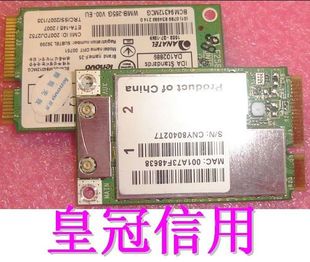
    Netbook Broadcom (43xx) Cards with Debian Lenny


    So with Ubuntu 9.04 (and possibly earlier) the Broadcom Wireless NIC in your Netbook (mine happens to be a Lenovo Ideapad S10) should just work. But obviously this will not happen with Debian 5.0. Because very little in Debian just works.

    So the first thing to know is to ignore an articles such as these that tell you to mess with firmware. Also ignore whatever is on the Debian.

    You do NOT have to use the fwcutter tools. Do it this way.

    First, install your kernel headers (I use an OpenVZ kernel)

    # apt-get install linux-headers-`uname -r`

    Download the module source for the Linux STA driver from Broadcom.

    Create a directory and uncompress the tarball (mine was hybrid-portsrc-x86_32-v5_10_91_9.tar.gz)

    debian-s10:~/bc# pwd
    /root/bc
    debian-s10:~/bc# ls
    built-in.o Makefile src wl.mod.o
    hybrid-portsrc-x86_32-v5_10_91_9.tar.gz modules.order wl.ko wl.o
    lib Module.symvers wl.mod.c

    The above is what you should see when you after you compile the module using the step below. Execute the command below from wihtin the directory that has the Makefile

    # make -C /lib/modules/`uname -r`/build/ M=`pwd`

    The resulting module you care about is wl.ko (assuming you have the ieee80211 module installed you will be able to insmod this and see the following in dmesg)

    [  922.523743] ACPI: PCI Interrupt 0000:05:00.0[A] -> GSI 18 (level, low) -> IRQ 18
    [ 922.523997] PCI: Setting latency timer of device 0000:05:00.0 to 64
    [ 922.622849] ieee80211_crypt: registered algorithm 'TKIP'
    [ 922.623123] eth1: Broadcom BCM4315 802.11 Wireless Controller 5.10.91.9
    and with a lshw

    description: Wireless interface
    product: BCM4312 802.11b/g
    vendor: Broadcom Corporation
    physical id: 0
    bus info: pci@0000:05:00.0
    logical name: eth1
    version: 01
    serial: 00:21:00:7e:7a:7d
    width: 64 bits
    clock: 33MHz
    capabilities: pm msi pciexpress bus_master cap_list ethernet physical wireless
    configuration: broadcast=yes driver=wl0 driverversion=5.10.91.9 ip=192.168.1.24 latency=0 module=wl multicast=yes wireless=IEEE 802.11bg

    so I modified /etc/modules so that it looks like

    # /etc/modules: kernel modules to load at boot time.
    #
    # This file contains the names of kernel modules that should be loaded
    # at boot time, one per line. Lines beginning with "#" are ignored.
    # Parameters can be specified after the module name.
    loop
    ieee80211

    So that ieee80211 gets loaded and then added the following line to my rc.local file (before the exit 0, obviously)

    insmod /usr/local/lib/modules/`uname -r`/wl.ko

    After copying the module there and creating the directory (remember mkdir -p is your friend)

    Now NetworkManager should work just fine. And WPA2 worked just fine with my crappy Westell AP.

    I tried putting in somewhere in lib/modules/`uname -r` with no luck, but this works for me...

    * * *

    NOTE: Don't click on the image PCI Express Card image. It contains Chinese Ghostnet Malware that will turn your Mac (and only your Mac) into a Zombie botnet enabling a complete blackout or extortion of the power grid.

    Additional keywords: NERC, FERC. SCADA. Project Grey Goose. Cyberwar. ISN. TASE.2

    Best Linux Virtualization for Netbooks?

    So I use my Lenovo Ideapad S10 as my main Linux box nearly 40% of the time. I've 1.5GB of RAM and 120GB drive so this a decent machine. My current setup is two Linux partitions, one for Ubuntu 9.04 and the other for Debian 5.0. Ubuntu is my production distro and Debian is for bleeding edge stuff. My main requirement is to run Linux VM's (of other distros than what I run on the host) because if I need to run Windows or Solaris or whatever I can connect to a remote system. For Linux systems I want "server virtualization" meaning I don't have to have a console up. Realistically there is no single solution that will meet my requirements, but here are my thoughts on the alteratives for running on a Linux Atom-based Netbook.

    1) OpenVZ - this would be my first choice. Unfortunately there are only kernel for Ubuntu 8.04 LTS and Debian for the these and Ubuntu LTS is too old to work well for a desktop on netbooks. I have yet to get the Broadcom drivers working yet on Debian and the latest stable OpenVZ kernel patches are 2.6.18. I guess the real issue is if I could get the Broadcom drivers working on the stock kernel that would be the way to go.

    2) VMware Player - I don't want to put VMWare Server 2.x on my laptop and this seems like the logical choice. I already have this for BSD or Windows.

    3) lguest - this is something new that I've just discovered. Can I run a CentOS VM under this. Not sure.

    I don't care for VirtualBox and Qemu is too damn slow. Is there anything else I'm missing?

    Sunday, April 12, 2009

    Painless, Distro-Agnostic Cisco Webex on Linux


    For true cross-platform web conferencing, Cisco Webex is the only way to go. GotoMeeting only recently added OSX support, and Linux, forget about it?

    My experience on getting it work with the built-in components on my Thinkpad... forget about it!

    Ubuntu 8.0.4 worked sporadically and and on 8.10 Firefox crashed. Hard.

    I Googled a bit and didn't find any quick workarounds, so I decided to try it the old fashioned way. So here is what I came up with to get it working reliably. I assume this works on other distros as well.

    (All of this assumes you create another user for just webex so you don't corrupt your local .mozilla and .adobe files etc.)

    Download Components

    1. Get the tarball of Adobe Flash (10.0.22.87 tested)
    2. Download Firefox 3.x (3.0.8 tested)
    3. Download JRE .bin installer (jre6u13-linux-i586.bin used)
    4. Create a webex directory and move all of these to it
    5. Uncompress them there

    Configuration

    1. Remove ~/.mozilla and ~/.adobe
    2. Run ~/webex-local/firefox/firefox then quit
    3. Run the ./flashplayer-installer script
    4. Run the java installer binary
    5. Create the symlink for the java plugin within $HOME

    ln -s ../../webex-local/jre1.6.0_13/plugin/i386/ns7/libjavaplugin_oji.so

    Testing Webex

    1. Run your local firefox
    2. Confirm you can execute java applets by visiting http://java.sun.com/applets/jdk/1.4/demo/applets/Clock/example1.html
    3. Click on the test meeting http://support.webex.com/support/support-overview.html

    Thursday, April 09, 2009

    SCADA CyberSpy Reverse Forensics Contest


    So given the hoopla on Chinese/Russian CyberSpy Hacking the Power Grid Story I figured it was time to break Blog-silence.

    I had the misfortune of hearing Siobhan Gorman on NPR yesterday on my commute so I was still fuming yesterday about the vermin in the Intelligence Community that leak classified threat data on "background" to reporters to influence policy. This data cannot be repudiated not only because most journalists don't have the technical wherewith all to know better but because the leakers cannot be held accountable. The "good guys" in the IC (those that follow the rules and don't disclose secrets) cannot challenge (or confirm) it. It is a one-sided game that leads to bad policy, scaring the public, and bad legislation. Does anyone not remember Iraq and WMDs?

    But I digress.

    What was interesting about the Gorman interview was that she mentioned network forensic data that showed how control systems not only had been penetrated and were being remotely monitored and possibly controlled.

    So some readers may remember the HoneyNet Projects Reverse Challenge. Basically a contest to analyze malware, if you never heard of it

    What I think would be cool is some aspiring folks with the skills and time (I have some of the former but none of the latter) to basically create some forensic data, let's say packet captures that show the power grid being mapped, HMI's and PLCs being monitored, ICCP traffic being captured and retransmitted back to our Chinese and Russian masters so they can "monitor power flows" like Gorman mentioned in her interview. Remember be sure to visit APNIC and pick your IPs to spoof wisely.

    The minimum entry can just be some packet captures, but you are guaranteed to at least place if you release actual tools used by our Chinese and Russian overlords to blackmail us at will and cause us to resort to cannibalism.

    You get bonus points if you actually show some slight knowledge of Mandarin or Russian.

    But here's the rub, don't release it on your blog don't talk about it at the next Con because there will inevitably be lots of presentations on the topic. Silently release your own "evidence of Chinese Russian control over the power grid" into a P2P network, or better yet let your laptop get stolen in an airport (make sure you have the right colored classification stickers on your laptop) and wait for your "data" to make the news.

    Tuesday, March 10, 2009

    An Oldie But a Goodie

    Yeah, back during the 01 layoffs at Cisco (or was it afterwards, during one of the never-ending reorgs can't recall) I had a DIVX of Office Space that I would watch while I worked to remain productive and we'd take lots of orbits around the parking lot and watch for this old guy with a beard down to his knees that would get off his shift at 3:30 at the Tyco fab next door and walk to his Corvette. Happy days!


    Time to leave the SBUX and get to work...

    Wednesday, March 04, 2009

    "Cyber Katrina" or "Digital Pearl Harbor" (which is a more loathsome term?)


    Every time you hear 9/11 or Cyber Katrina you should reach for your wallet.  

    Does anyone find this sort of hyperbole rhetorically effective?

    Chairperson

    House Permanent Select Committee on Intelligence

    Washington, D.C.

    RE: Establishment of North American Urgent Radiological Information Exchange

    Madame Chairperson:

    While we do not believe that this is a matter that rightfully falls under the province of your Committee, in the interest of cooperation, this letter will address the events leading up to the establishment of the North American Urgent Radiological Information Exchange (NAURIE).

    As you know, on the 10th year anniversary of 9/11, all of our nation’s nuclear power plants were targeted in a massive distributed denial of service attack orchestrated by the Conficker III botnet which had grown to a heretofore unheard of 30,000,000+ infected PCs.

    While US CERT teams as well as regional DOE cyber security personnel were focused on combating this external threat, each plant’s internal firewall separating the Command and Safety System Networks from the Site Local Area Network was breached from the inside due to the use of pirated hardware with malicious embedded code that passed server control to external users.

    Of even more concern is the fact that all of these plants were targets of a carefully planned, longterm social engineering attack which relied on human error and the broad-based appeal of Social Network sites. As DOE employees broke protocol and downloaded phony social software apps, malicious code worked its way into secure networks and lay dormant until activated by the attacking force.

    This led to a number of consecutive failures in our safety mechanisms resulting in partial to complete core meltdowns at 70% of our plants. When these plants went offline, the nation’s power requirements couldn’t be met. Grids were overwhelmed and blackouts began occurring in our most heavily populated urban areas. Once criminal gangs realized that overburdened police departments were unable to respond to every 911 call, looting of businesses began in earnest as did home invasions in the wealthier neighborhoods.

    One year later, we still do not have a final count on the number of deaths and casualties but most responsible estimates place them in the tens of thousands. If we extrapolate out for the as yet unknown future effects of radiation poisoning on the victims, the count goes into six figures.

    While this is clearly a tragedy on every level, I feel I must point out that the NNSA, as late as 2009, in a letter to the Los Alamos National Laboratory, did our part in improving security by determining that the loss of 83 LANL laptops should no longer be considered just a “property management” issue, but a cyber security issue as well.

    Also, that our G3 physical security model (Gates, Guards, Guns) was not compromised, and that cyber security compliance has never been a mandatory policy; that instead it was an ongoing negotiation among various other considerations.

    Sincerely,

    Director, National Nuclear Security Agency
    (BTW, this is far less salacious than the scenario we came up with for CyberStorm 2005 in the Energy sector)

    So. Am I just a reactionary? Is this sort of FUD a necessary evil to make "progress on cybersecurity" or just another boondoggle.

    Sunday, March 01, 2009

    ASA5505 SSLVPN Port Forwarding


    So as I've been chronicling over on @frednecksec I've been pleasantly surprised with the new ASA5505 I got for my classroom network. Although I'm looking forward to replacing iptables the main reason for the purchase was the WebVpn. In particular the ability to do port forwarding. Yes this is just like SSH local port forwarding.

    Here is config snippet for ASA 7.2(4) to allow you to get port forwarding working.

    Enable WebVPN

    webvpn
    enable outside


    Actually if you stop here you would be able to do URL redirection and get to web servers behind the ASA, although this doesn't show up anymore now that port forwarding is setup.


    port-forward SSH 2223 192.168.55.100 ssh

    group-policy first internal
    group-policy first attributes
    vpn-tunnel-protocol webvpn
    webvpn
    functions port-forward auto-download
    port-forward value SSH


    Some gotchas here. "port-forward" and "auto-download" have to be on the same line together. It wasn't immediately obvious to me that I had to do the "port-forward value" line. My general approach for Cisco CLI work is to just brute force it to find the minimal config. But this was the key thing I ran across. Unless you had this line, the session won't show up in the UI (see above) although the applet will download.

    The steps below are pretty straightforward once you have the group-policy created (above)


    username vpnuser password ... encrypted
    username vpnuser attributes
    vpn-group-policy first
    tunnel-group test type webvpn
    tunnel-group test general-attributes
    default-group-policy first


    This works on Ubuntu 8.10 (Java6) and Firefox 3.x, OSX 10.4 with Safari 3, and Windows XPSP3 both Firefox 3.x and IE (who knows what versions).

    Sunday, February 22, 2009

    Personal or Professional (or, why one Twitter account is Not Enough?)

    So I just hit my 400th tweet on @mdfranz but am scarcely up to 20 @frednecksec and I've learned a few things about how I like to use this addictive service in the past few months. And yeah (if you went there) my updates are protected, but more or that later.

    When I was first started following people, I was annoyed by technical people (whose blogs I read or knew personally) that only tweeted about personal stuff, so I didn't follow them. I could give a shit about what what sort of decadent food they were cooking, what they were doing with their wife, or their kids accomplishments. But I was interested in 140 characters of wisdom on some technical/technology topic. If there was at least a 50:50 ratio of personal to professional context I kept following, otherwise I dropped them.

    Personal Branding
    As Tom Peters would say, "you are your customers." Your personal brand is reflected in the those that you do business with and those that do business with you. The same applies to you twitter followers and folks you tweet with. If people that follow you tweet about stupid shit (to put it crudely, but probably characterizes some large % of tweets) that reflects poorly on you, since one of the first things I do when I follow someone (or someone follows me) is I check out the people they follow and their followers. It is the same principle as only connecting with "people you trust" on LinkedIn. On my public account I'm more open to follow somebody I don't know well enough or let anybody follow me, including spambots. But on my private account I approve all followers.

    Privacy
    Frankly, a lot of stuff you tweet on has no business on public Internet (and all the various bots that follow you) where you shop, what you eat, the activities you do with your family, where you are geographically is none of the damn business of people that you don't really know, let alone twitter's public timeline. This is why I protect my updates on @mdfranz but don't on @frednecksec. Several weeks ago I registered for a demo version of some webapp and a product manager/sales person started following me. Creepy. I don't want sales people following me. And during the inauguration I wondered about how well Sprint's EVDO network would hold up and I had somebody in customer server ping me. She was nice/professional enough but I don't want that sort of interaction. I also don't want people I don't know to where I frequent.

    Different Media for Different Messages
    I've found that there are also two kinds of tweets: those personal, biased observations, and more objective factual statements that answer the original twitter question, "what are you doing?" More specifically what I'm am I reading that might be of interest to my readers. More reflective, opinionated tweets go on my personal account while the others (especially that are narrowly security related) go on my public account. This is the reason I've moved most of my high volume twitter lists (that mostly shared links and article) over to my public account. Public content stays public, private content stays private and I can also see on my public account when something I've read about, seen has already been tweeted on. I think RT is lame since the whole point is to post original content or content that reflects a certain perspective or range of interests.

    So what Twitter client allows you to use multiple accounts at once, twhirl. Or use multiple browsers which is generally a good idea.

    Thursday, February 19, 2009

    Installing OpenSolaris on Lenny dom0 (sort of)

    Here is my domain config file (open1.py)

    mfranz-61lenny:/alt/xen/domains/opensol# cat open1.py
    name = "solaris"
    memory = "1024"
    disk = [ 'file:/alt/isos/osol-0811.iso,6:cdrom,r', 'file:/alt/xen/domains/opensol/disk.img,0,w' ]
    vif = [ '' ]
    bootloader = '/usr/lib/xen-3.2-1/bin/pygrub'
    kernel = '/platform/i86xpv/kernel/unix'
    ramdisk = '/boot/x86.microroot'
    extra = '/platform/i86xpv/kernel/unix - nowin -B install_media=cdrom'


    And here is proof that I did it


    mfranz-61lenny:/alt/xen/domains/opensol# xm create -c open1.py
    Using config file "./open1.py".
    Started domain solaris
    v3.2-1 chgset 'unavailable'
    SunOS Release 5.11 Version snv_101b 32-bit
    Copyright 1983-2008 Sun Microsystems, Inc. All rights reserved.
    Use is subject to license terms.
    Hostname: opensolaris
    Remounting root read/write
    Probing for device nodes ...
    Preparing live image for use
    Done mounting Live image
    USB keyboard
    1. Albanian 22. Latvian
    2. Belarusian 23. Macedonian
    3. Belgian 24. Malta_UK
    4. Bulgarian 25. Malta_US
    5. Croatian 26. Norwegian
    6. Czech 27. Polish
    7. Danish 28. Portuguese
    8. Dutch 29. Russian
    9. Finnish 30. Serbia-And-Montenegro
    10. French 31. Slovenian
    11. French-Canadian 32. Slovakian
    12. Hungarian 33. Spanish
    13. German 34. Swedish
    14. Greek 35. Swiss-French
    15. Icelandic 36. Swiss-German
    16. Italian 37. Traditional-Chinese
    17. Japanese-type6 38. TurkishQ
    18. Japanese 39. TurkishF
    19. Korean 40. UK-English
    20. Latin-American 41. US-English
    21. Lithuanian
    To select the keyboard layout, enter a number [default 41]:


    [snip]
    User selected: English
    Configuring devices.
    Mounting cdroms
    Reading ZFS config: done.

    opensolaris console login: root


    Now what do i do?

    Sunday, February 15, 2009

    Grampa, where did you live during the "Long Depression" that started in 2008?

    Richard Florida's article How the Crash Will Reshape America captures a lot of what has been on my mind (and occasionally blogged about) since we left Skokie last June. 

    From the packing up and leaving what my son called "best house ever" (the shaky footage is his) without a sold sign out front to some motel thoughts on the trip to premonitions of the impending collapse back to July (more specifically the non-sustainability of suburban sprawl) to the "discussions" my wife share on how long we should rent and when and where we should buy a common thread is that where you live matters.

    It matters a lot. A hell of a lot. Your future may depend on it.

    In October, less than a month after the financial markets began to melt down, Moody’s Investor Services published an assessment of recent economic activity within 381 U.S. metropolitan areas. Three hundred and two were already in deep recession, and 64 more were at risk. Only 15 areas were still expanding. Notable among them were the oil- and natural-resource-rich regions of Texas and Oklahoma, buoyed by energy prices that have since fallen; and the Greater Washington, D.C., region, where government bailouts, the nationalization of financial companies, and fiscal expansion are creating work for lawyers, lobbyists, political scientists, and government contractors.
    Back in September, in the early days of the of the financial crisis, I thought about it a lot as I would look out into the Catoctins from the little park in our subdivision while my kids played (oblivous to what was on the radio) and I started to feel the first hint of Fall, that reminded me of 1987, my first Fall back in the states after living in Malaysia for 2 years. 

    It was scary. With dozens of showings since our house went on the market on April 15th, 2008 yet not a single offer the constant talk of the forelosure crisis on the NPR, to say that it was stressful, it was an understatement.

    Why did we buy in Chicago when we did? Why did we buy in one of the most overpriced suburbs on the Chicago North side? Well, because we couldn't afford Evanston or Winnetka and because of Skokie's diversity. We did not want our adopted Chinese daughter to be "the Chinese girl" in her pre-school class. Yes the schools were full of industrious recent immigrants. Immigrants that didn't care for the red brick Cape Code with the master bedroom where I sometimes bumped my head on the ceiling or the hardwood floors. All they wanted was space.

    Multiple generations would fill the ugliest split level boxes you can imagine adjacent Crawford or Dempster. We heard from our realtor only the split levels were selling and how the demographics of the visitors were "different" (she was trying to abide by some regulations)  between our house and the those on nearby streets. Yes, so much was different between Austin and Skokie. Our first house two blocks from North Lamar (and where you could hear the music from Threadgills) sold on the first day. Those were different times and different places. 

    Mostly white folks in their late 20s and early 30s. The hint of pot when you walked down the streets, some which had sidewalks some that did not. Certainly a larger percentage of Gay/Lesbian couples than in our previous neighborhood in San Antonio. Small three bedroom houses (if you were lucky) built in the late 40s and early 50s during the postwar boom. Aging water mains under streets and periodic electric outages. DSL was just starting to roll out. 

    I remember seeing the street literally explode in front of our house on Brentwood: the last affordable neighborhood south of Anderson lane. Stay at home moms with graduate degrees. At the Elementary School meetings I felt out of place because I was sans tattoo. If I recall, our first night in Austin was on Halloween of 1999. The dotcom boom was in still in full swing and drcoop.com still held prime real estate overlooking MOPAC. 

    We sat in the swings in Pease park that Thanksgiving, childless, awaiting what would be our final referral from Russia that would arrive in a matter of weeks and we would discuss it at the Little Deli on my lunchbreak, short 5 minute drive from the Southwestern Bell office on Huntland, adjacent to I-35. 

    And all that we now know was still ahead of us: the letdown of Y2K, the NASDAQ crash in the Spring (I remember a day-trading colleague who had just joined from Dell) losing a lot that spring. I joined Cisco right after the last stock split in May 20o0 and I remember someone from SBC saying something about how I "was set" and could "retire." 

    Yes, Austin is/was one of Florida's poster children for these new creative cities.
    Thirty years ago, educational attainment was spread relatively uniformly throughout the country, but that’s no longer the case. Cities like Seattle, San Francisco, Austin, Raleigh, and Boston now have two or three times the concentration of college graduates of Akron or Buffalo. Among people with postgraduate degrees, the disparities are wider still. The geographic sorting of people by ability and educational attainment, on this scale, is unprecedented.
    The University of Chicago economist and Nobel laureate Robert Lucas declared that the spillovers in knowledge that result from talent-clustering are the main cause of economic growth. Well-educated professionals and creative workers who live together in dense ecosystems, interacting directly, generate ideas and turn them into products and services faster than talented people in other places can. There is no evidence that globalization or the Internet has changed that. Indeed, as globalization has increased the financial return on innovation by widening the consumer market, the pull of innovative places, already dense with highly talented workers, has only grown stronger, creating a snowball effect. Talent-rich ecosystems are not easy to replicate, and to realize their full economic value, talented and ambitious people increasingly need to live within them
    Returning home right before noon on that fateful blue September morning in 2001 after we watched both towers Fall live in the conference room. Watching the Reserve and National Guard Intelligence units gradually get activated and a getting a call from my XO down in San Antonio saying my name was on the list to deploy to Fort Belvoir. Packing my duffel bag, sitting around the table of our retro kitchen table and trying to explain to a toddler that Dada was going to go away for a while. Of course the orders were rescinded but my son and I were baptised in the Episcopal church anyway that Fall. There was more to it than that of course, but that was Austin. 

    Years later I would grow restless and leave Cisco and work (virtually) from coffee shops on Lamar, Burnet, and Anderson and from my hot home office that used to be a kitchen and where supposedly a previous resident had died.  From the heat and the solitude I would slowly go crazy and would start looking to find a new job where I could work in an office again. I would strike out in Seattle (yeah I wrote that after bombing my AMZN interview, badly) but cool clarity would come soon. 

    Giving up on big West coast software companies, I dug into the SCADA Plugins and a recruiter from Hewitt called, offering crazy money, a chance to run/develop Open Source security boxes in a large company and not do vuln work which I'd grown, a sweet relocation package,  and a way to escape the Texas heat. 

    * * *

    We will see if it is true but one of the more important (and troubling) charactization of our current malaise, elswhere Florida says our depression has more in common with the "Long Depression" of the late 19th century than the Great Depression:
    Economic crises tend to reinforce and accelerate the underlying, long-term trends within an economy. Our economy is in the midst of a fundamental long-term transformation—similar to that of the late 19th century, when people streamed off farms and into new and rising industrial cities. In this case, the economy is shifting away from manufacturing and toward idea-driven creative industries—and that, too, favors America’s talent-rich, fast-metabolizing places.
    And on the importance of geography:

    To a surprising degree, the causes of this crash are geographic in nature, and they point out a whole system of economic organization and growth that has reached its limit. Positioning the economy to grow strongly in the coming decades will require not just fiscal stimulus or industrial reform; it will require a new kind of geography as well, a new spatial fix for the next chapter of American economic history.

    Suburbanization was the spatial fix for the industrial age—the geographic expression of mass production and the early credit economy. Henry Ford’s automobiles had been rolling off assembly lines since 1913, but “Fordism,” the combination of mass production and mass consumption to create national prosperity, didn’t emerge as a full-blown economic and social model until the 1930s and the advent of Roosevelt’s New Deal programs. 

    And, among other things, the foolishness of the American Dream of owning your own house. Thank God we're still renting.

    On one level, the crisis has demonstrated what everyone has known for a long time: Americans have been living beyond their means, using illusory housing wealth and huge slugs of foreign capital to consume far more than we’ve produced. The crash surely signals the end to that; the adjustment, while painful, is necessary.

    But another crucial aspect of the crisis has been largely overlooked, and it might ultimately prove more important. Because America’s tendency to overconsume and under-save has been intimately intertwined with our postwar spatial fix—that is, with housing and suburbanization—the shape of the economy has been badly distorted, from where people live, to where investment flows, to what’s produced. Unless we make fundamental policy changes to eliminate these distortions, the economy is likely to face worsening handicaps in the years ahead.

    Suburbanization—and the sprawling growth it propelled—made sense for a time. The cities of the early and mid-20th century were dirty, sooty, smelly, and crowded, and commuting from the first, close-in suburbs was fast and easy. And as manufacturing became more technologically stable and product lines matured during the postwar boom, suburban growth dovetailed nicely with the pattern of industrial growth. Businesses began opening new plants in green-field locations that featured cheaper land and labor; management saw no reason to continue making now-standardized products in the expensive urban locations where they’d first been developed and sold. Work was outsourced to then-new suburbs and the emerging areas of the Sun Belt, whose connections to bigger cities by the highway system afforded rapid, low-cost distribution. This process brought the Sun Belt economies (which had lagged since the Civil War) into modern times, and sustained a long boom for the United States as a whole.

    But that was then; the economy is different now. It no longer revolves around simply making and moving things. Instead, it depends on generating and transporting ideas. The places that thrive today are those with the highest velocity of ideas, the highest density of talented and creative people, the highest rate of metabolism. Velocity and density are not words that many people use when describing the suburbs. The economy is driven by key urban areas; a different geography is required

    Of course a lot of this (as well as the stimulus package) hinges on whether or not the era of manufacturing jobs is truly gone.

    Twitter / FredneckSec Updates


    For better or worse, I'm now up to 2 twitter accounts, having created @frednecksec with the goal of trying (once again) to form a Security networking group in the Frederick area along the lines of CharmSec or NoVA Sec except for us country folks that live too far out to make it into (or stick around after work) to the DC/Baltimore area.

    Yeah, so this is definitely cutting into my blogging. Apart from a regional focus I hope to tweet on stuff you won't see elsewhere on any of the twitter, even if it tends to border on the obscure.

    FredneckSec was something a couple of us (unsuccessfully) tried to do last Summer but am hoping with power of twitter and some new folks I've met here in the New Market area to tried to get this rolling again real soon now.